



The Boy Who Refused to Let His Dream Die
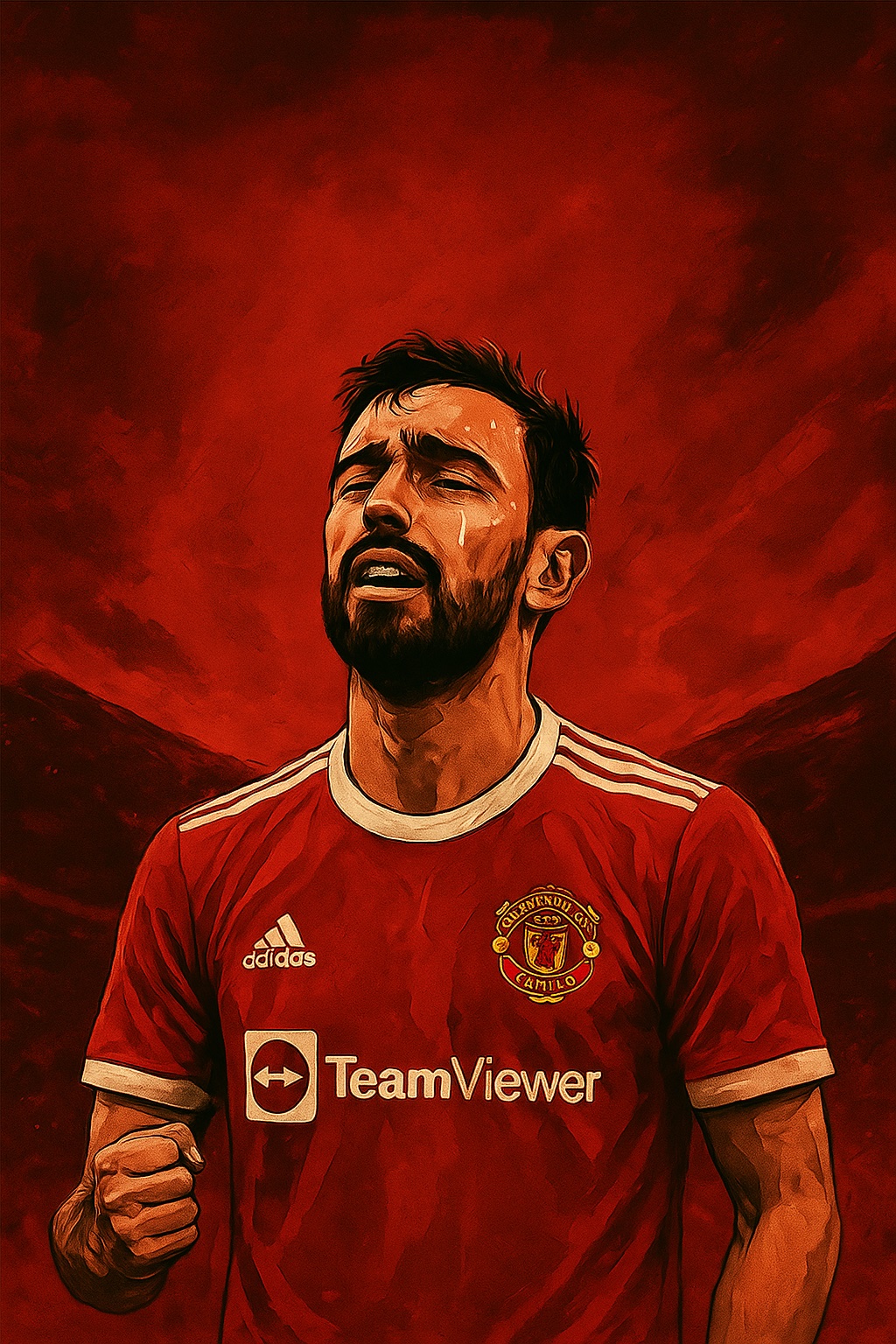
Football has always been a game of emotions, but for Bruno Fernandes, it has been nothing less than a lifelong confession. Every goal, every pass, every tear has been a piece of his truth. To understand him, you must understand the boy who grew up with nothing but a dream, a brother to compete with, and a father who taught him that love is not praise, but honesty.
From the beginning, Bruno’s world revolved around football. He played until his legs ached, inventing goals out of tree branches, turning empty streets into Old Trafford in his imagination. While his friends picked their idols carefully, his choice was never in doubt. His brother adored Barcelona and Messi, but Bruno—still just a skinny kid—chose Manchester United. Not because it was fashionable, but because something inside told him this was destiny. He dreamed not just of being a footballer, but of wearing the crest of the Red Devils.
Yet dreams always come with shadows. His father, the quiet presence in his life, never handed him empty compliments. After one of his youth matches, when everyone else was showering Bruno with praise, his father only remarked:
“You left space for the goal they scored.”
It wasn’t criticism—it was truth. It was discipline. That lesson, sharp and sometimes painful, shaped Bruno more than any victory ever could. It taught him that football was not about applause but about responsibility.
That mindset became his shield when life tested him early. At just 17, he left Portugal for Italy, a teenager stranded in a foreign country where he didn’t speak the language, didn’t know the culture, and often felt like giving up. There were nights he wanted to quit, to go home, to escape the loneliness. But the same voice that once told him about his defensive error echoed louder:
be stronger, be better, don’t run from the pain.
Years later, the boy who once cried in silence during those lonely Italian nights found himself watching Cristiano Ronaldo up close in the Portugal dressing room. It was a surreal moment. Bruno had been nine years old during Euro 2004, face painted, flag draped across his shoulders, watching Ronaldo’s tears in the final. Now he was here, sharing the same kit, the same dream. The circle of destiny was slowly closing.
But the most emotional chapter of his story wasn’t on the pitch—it was at home. When Manchester United came calling in 2020, Bruno called his wife, his brother, his father. His voice cracked. He couldn’t stop the tears. On the other end of the line, they cried too. Not because of fame, not because of money, but because they understood what this meant. The boy who used to shout “United!” in his backyard was finally going to Old Trafford—not as a fan, but as its playmaker.
Even then, his father didn’t rush to congratulate him. He waited. Just as he always had. Even today, after every match Bruno plays, his father waits 24 hours before saying a word. It is his way of reminding his son that emotions must settle before truth can be spoken. It is his way of showing love without drowning it in softness. And Bruno, more than anyone, understands it.
When he steps onto the pitch now, the weight he carries is not only the badge of Manchester United or the hopes of Portugal. He carries his brother’s rivalry, his father’s silence, his wife’s tears, his childhood promise. Every penalty he takes, every scream of passion, every desperate sprint in the dying minutes of a game—it all comes from a boy who refused to let his dream die.
Bruno Fernandes will tell you he’s just a footballer. Just a kid who loves the game. But the truth is different. He is the embodiment of resilience, of sacrifice, of the stubborn fire that refuses to go out. He is the reminder that greatness isn’t given—it’s built, piece by piece, from discipline, heartbreak, family, and an unshakable belief in destiny.
And maybe that is why, when we see him on the pitch—arguing with referees, demanding more from his teammates, never hiding, never giving up—we recognize something in him. Because Bruno isn’t just Bruno Fernandes. He is every one of us who ever dreamed, cried, stumbled, and still chose to fight again.