



Jon Jones vs Matt Hamill: The Controversial Loss That Changed Everything
In 2009, Jon "Bones" Jones was an undefeated rising star in the UFC who seemed destined for greatness. At just 22 years old, he was quickly making a name for himself with his unique fighting style, incredible reach, and impressive victories over seasoned opponents. Standing at 6'4" with an 84.5-inch reach, Jones possessed physical attributes that were almost unfair in the light heavyweight division. His unorthodox striking, creative use of elbows, and excellent wrestling background made him a nightmare matchup for most fighters. However, one seemingly routine fight would create a controversial mark on his otherwise perfect record that would follow him throughout his career.
Matt Hamill presented a fascinating story in the world of mixed martial arts. Born completely deaf, he had overcome tremendous challenges to not only compete but excel in one of the most demanding sports in the world. Hamill couldn't hear the bell, the crowd, or even his corner's instructions during fights, relying instead on visual cues and his own instincts. His journey to the UFC was remarkable - he had been a standout wrestler at the Rochester Institute of Technology, where he became the first deaf wrestler to win a National Collegiate Wrestling Association national championship. His wrestling credentials were impressive, but what made him truly special was his heart and determination to succeed despite his disability.
When Hamill transitioned to mixed martial arts, he brought that same relentless work ethic and never-quit attitude. He wasn't the most technically gifted striker, but his wrestling base was solid, and his ability to push through adversity was legendary. Hamill had earned his way into the UFC through The Ultimate Fighter reality show, where his inspiring story and gritty performances won over fans. By the time he faced Jones, he had established himself as a respected veteran in the light heavyweight division, known for his toughness and ability to make fights grueling affairs.
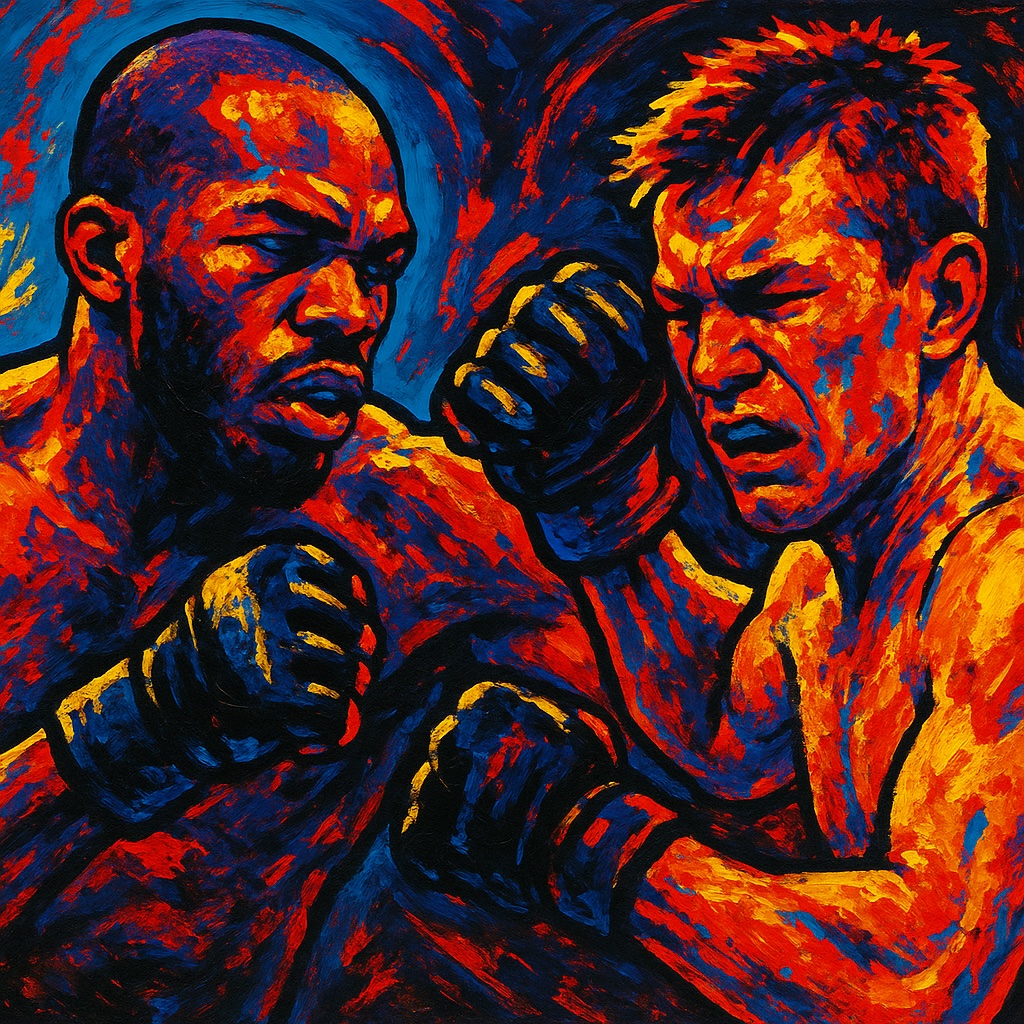
The matchup between Jones and Hamill at UFC 96 on March 7, 2009, was expected to be a showcase for the young phenom Jones. Most analysts and fans saw it as a step-up fight for Jones against a game veteran, but not necessarily a serious threat to his undefeated streak. The fight was part of Jones' steady climb up the light heavyweight rankings, and a victory would position him for even bigger opportunities in the stacked division.
From the opening bell, the fight unfolded exactly as most experts had predicted. Jones immediately established his range and began picking Hamill apart with his diverse striking arsenal. His jab was sharp, his kicks were landing with authority, and his movement was fluid and confident. Hamill, true to form, was pressing forward and trying to close distance, but Jones' reach advantage and superior footwork were keeping him at bay. The young fighter was displaying the skills that would eventually make him one of the greatest light heavyweights of all time.
As the first round progressed, Jones became more aggressive and began unleashing the creative striking combinations that would become his trademark. He was mixing in spinning elbows, unorthodox angles, and showing the kind of finishing instinct that separates good fighters from great ones. Hamill was absorbing punishment but continuing to move forward, his legendary toughness on full display even as he was being systematically dismantled.
Then, in what seemed like a routine exchange, Jones secured a position where he could deliver ground strikes to the grounded Hamill. In that moment, he threw what are called "12-6 elbows" - downward elbow strikes that come straight down at a 90-degree angle, resembling the motion of someone chopping wood. These elbows, while devastating and seemingly natural in the flow of ground-and-pound, were explicitly banned under the Unified Rules of Mixed Martial Arts that the UFC followed.
The rule against 12-6 elbows has always been somewhat controversial in the MMA community. Many fighters and analysts argue that the rule doesn't make much sense from a safety standpoint, as other types of elbows that can be just as damaging are perfectly legal. The origin of the rule supposedly came from demonstrations where martial artists would break ice blocks and concrete with downward elbow strikes, leading to concerns about the potential for serious injury. However, critics point out that the controlled environment of breaking objects is vastly different from the dynamic situation of a real fight.
Referee Steve Mazzagatti, who was officiating the bout, immediately recognized the illegal strikes and stopped the fight. In a split second, what had been a dominant performance by Jones turned into a disqualification victory for Hamill. The arena, which had been witnessing what appeared to be another impressive Jones victory, suddenly fell into confusion as the referee waved off the fight and declared Hamill the winner.
The decision was immediately and intensely controversial for multiple reasons. First and most obviously, Jones had been completely dominating the fight up to that point. He was ahead on all scorecards, had landed the more significant strikes, and appeared to be well on his way to either a decision victory or possibly even a finish. The illegal elbows, while against the rules, didn't appear to cause any serious damage to Hamill, and many observers felt they weren't significantly different from the legal strikes Jones had been landing throughout the fight.
More concerning to many was the inconsistency in how such rules violations were typically handled. In many cases, referees would issue warnings for illegal strikes, especially when they didn't appear to be intentionally malicious or cause serious damage. The fact that Mazzagatti immediately disqualified Jones without any warning seemed harsh to many observers, particularly given the context of how the fight was unfolding.
UFC President Dana White was absolutely livid about the outcome. In his post-fight press conference, White didn't mince words about his feelings regarding the decision. He publicly criticized the referee's judgment and called the result a "fluke" that didn't represent what actually happened in the octagon. White believed that Jones had earned the victory through his superior performance and that the disqualification was an injustice that shouldn't stand.
White's frustration was understandable from a business perspective as well. Jones was being positioned as a future star of the light heavyweight division, and this controversial loss could potentially derail the momentum that had been building around the young fighter. The UFC had invested considerable resources in promoting Jones, and seeing him suffer his first loss due to what many viewed as a referee's mistake was particularly galling.
In the years that followed, White would continue to express regret about not fighting harder to overturn the decision. He felt that the Nevada State Athletic Commission should have reviewed the fight and changed the result to a no-contest, given the circumstances. White believed that the loss was a stain on Jones' record that didn't belong there, and he wished he had been more aggressive in pursuing all available options to have it corrected.
The controversial nature of the loss was compounded by the fact that it represented Jones' first defeat as a professional mixed martial artist. Up until that point, he had been perfect, steamrolling through opponents with a combination of skill, athleticism, and fighting IQ that was rare for someone so young. The loss meant that Jones could never claim to be truly undefeated, even though most knowledgeable observers didn't consider it a legitimate defeat.
Despite this setback, or perhaps motivated by it, Jon Jones went on to have one of the most remarkable careers in UFC history. Less than two years after the Hamill fight, he would capture the UFC Light Heavyweight Championship by defeating Shogun Rua in spectacular fashion. At just 23 years old, he became the youngest champion in UFC history, a record that still stands today.
Jones' championship reign was nothing short of legendary. He successfully defended his title eight times, defeating a murderer's row of elite fighters including Quinton "Rampage" Jackson, Lyoto Machida, Rashad Evans, Vitor Belfort, Chael Sonnen, and Alexander Gustafsson. His fights were must-see events, combining technical brilliance with dramatic moments that captured the imagination of MMA fans worldwide.
What made Jones' success even more impressive was the creative and dominant way he defeated his opponents. He didn't just win fights; he often dismantled elite fighters in ways that no one had seen before. His use of oblique kicks to attack opponents' knees, his spinning elbows, and his ability to finish fights from seemingly impossible positions became legendary. Many of his victories are still studied by fighters and coaches as examples of high-level mixed martial arts technique.
The irony of the Hamill loss became even more apparent as Jones' career progressed. The very type of creative, aggressive fighting that led to the disqualification against Hamill became his calling card as champion. His willingness to attempt unorthodox techniques and his finishing instinct were exactly what made him so special, yet those same qualities had cost him his perfect record in that early fight.
For Matt Hamill, the victory over Jones became the defining moment of his fighting career. While he would continue to compete for several more years, he never again achieved the level of success or attention that came with defeating the future champion. Hamill always handled the unusual nature of his victory with class, acknowledging that he wasn't winning the fight when it was stopped but also pointing out that rules are rules, and Jones had clearly violated them.
Hamill's perspective on the fight was always measured and respectful. He understood that many people didn't view it as a "real" victory, but he also felt that he deserved credit for being durable enough to survive Jones' early assault and for being in position to benefit when his opponent made a mistake. In many interviews after the fight, Hamill emphasized that while he wasn't winning on the scorecards, fights can change quickly, and anything can happen in MMA.
The broader MMA community's reaction to the fight result was mixed and evolved over time. Initially, there was significant debate about whether the disqualification was appropriate. Many fighters, analysts, and fans felt that Mazzagatti had been too quick to stop the fight, especially given that the illegal strikes hadn't appeared to cause serious damage. Others argued that rules exist for a reason and that referees must enforce them consistently, regardless of the circumstances.
As Jones' career progressed and he established himself as one of the greatest fighters of all time, the Hamill loss began to be viewed more as a historical curiosity than a legitimate defeat. Most rankings and discussions of Jones' career treat the loss as an asterisk, acknowledging its existence while not giving it the same weight as a traditional defeat. This perspective became even more common as Jones continued to dominate the light heavyweight division and later moved up to heavyweight.
The fight also highlighted some of the ongoing issues with MMA rules and officiating. The 12-6 elbow rule, in particular, came under increased scrutiny following this incident. Many in the MMA community argued that the rule was outdated and didn't make sense from a safety or competitive standpoint. Some athletic commissions have since modified their interpretation of the rule, though it remains officially banned in most jurisdictions.
The referee's role in determining fight outcomes also became a topic of increased discussion. Mazzagatti, who was involved in several other controversial decisions throughout his career, became a polarizing figure in the sport. Some praised his strict adherence to the rules, while others criticized what they saw as overly intrusive officiating that sometimes changed the course of fights unnecessarily.
Looking back at the Jon Jones vs Matt Hamill fight more than a decade later, it serves as a fascinating case study in how a single moment can dramatically alter the narrative of a sporting event. What should have been another step in Jones' march toward greatness instead became a controversial footnote that continues to generate discussion among MMA fans.
The fight also demonstrates the razor-thin margins that exist in professional sports, where split-second decisions by officials can have lasting consequences for athletes' careers and legacies. For Jones, the loss served as an early lesson in the importance of discipline and rule adherence, even when dominating an opponent. For Hamill, it provided a career-defining moment that showcased his resilience and gave him a unique place in MMA history.
Today, Jon Jones is widely regarded as one of the greatest mixed martial artists of all time, having recently captured the heavyweight championship to add to his legendary light heavyweight reign. The Hamill loss, while still officially part of his record, is viewed by most observers as an anomaly rather than a legitimate defeat. It stands as a reminder that in combat sports, anything can happen, and even the most dominant performances can be overshadowed by a momentary lapse in judgment or an official's interpretation of the rules.
The legacy of this fight extends beyond just the two competitors involved. It serves as an important reminder about the complexity of rules in combat sports and the crucial role that referees play in maintaining both safety and fairness. While the outcome may have been controversial, it ultimately became part of the rich tapestry of stories that make mixed martial arts such a compelling and unpredictable sport.